

WHO WILL BE RESPONSIBLE IF THE PRODUCT YOU SELL ENCOUNTERS AN ISSUE?
When customers report product quality issues?
When authorities check the origin?
When the product lacks clear documentation for comparison?
When a minor issue directly affects the brand’s reputation?
In the food industry today, “cheap prices” can help businesses source products more easily or optimize short-term profits. But as soon as a problem arises related to food safety or product origin, the one facing direct pressure is actually the business owner, the seller, and the brand.
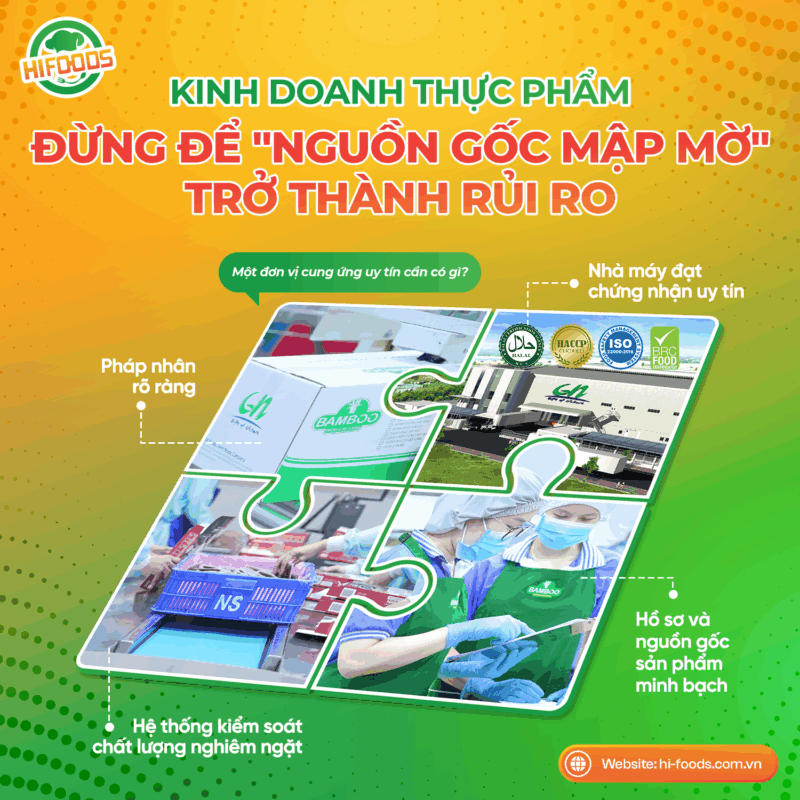
That’s also why transparency of food origin is becoming a top priority in the modern F&B industry.
TRANSPARENT FOOD ORIGIN IS BECOMING THE NEW STANDARD OF THE MARKET
CONSUMERS ARE INCREASINGLY CONCERNED ABOUT FOOD SAFETY
If previously consumers were only concerned about whether the food was delicious, now they set much higher standards:
- Where is the product produced?
- Does it meet food safety standards?
- Is it traceable?
- Is the producing unit transparent and reputable?
This trend in consumption is creating significant pressure on the entire F&B ecosystem, especially in HORECA, supermarkets, and modern retail systems.
FOOD WITHOUT CLEAR ORIGIN POSES MANY OPERATIONAL RISKS
A product with an unclear origin not only carries risks regarding quality but may also directly affect operational capability and brand reputation.

Businesses may face:
- Quality complaints from customers
- Legal inspection risks
- Operational disruptions
- Loss of consumer trust
- Long-term impact on the business brand
In the increasingly competitive food industry, choosing a reputable food supplier is no longer an advantage, but a necessity for sustainable development.
WHAT MUST A REPUTABLE FOOD SUPPLIER ENSURE?
CLEAR LEGAL STATUS AND LEGAL RESPONSIBILITY
A professional supplier needs to have complete legal information, business records, and clear responsibilities throughout the production and distribution process.
This is an important factor that helps businesses minimize risks when collaborating in the long term.
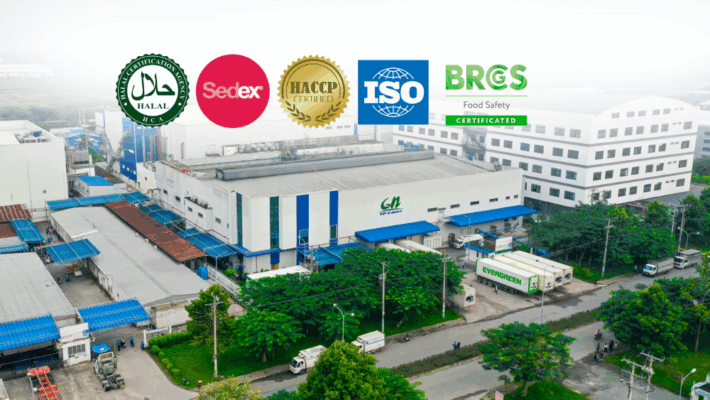
FOOD SAFETY STANDARDIZED FACTORY
The production platform directly influences the quality and safety of the products.
Factories that achieve international certifications will help ensure:
- Standardized production processes
- Strict food safety controls
- Stable quality between batches
- Ability to meet requirements from HORECA and modern retail systems
UNIFIED FOOD QUALITY CONTROL SYSTEM
An effective quality control system needs to be implemented from raw materials to the finished products.
Synchronized control helps minimize risks, while maintaining product stability when distributed on a large scale.
TRACEABILITY OF FOOD SOURCES IS AN IMPORTANT FACTOR IN MODERN HORECA
HORECA, supermarkets, and retail chains today have increasingly high demands regarding product records and traceability.
This is not only a legal factor but also the foundation for building long-term trust with consumers.
HI-FOODS AND GN FOODS FACTORY BUILDING A TRANSPARENT PRODUCTION SYSTEM
At HI-FOODS, transparency does not just exist on paper but is built from the entire production and quality control system at the factoryGN FOODS. Each process is standardized to ensure stability, safety, and the ability to control throughout the entire food supply chain.
The entire operating system is implemented in a synchronized manner to ensure:
- Strict quality control from raw materials: Raw materials are thoroughly tested before being used in production to ensure safety, quality, and stability between batches.
- Consistent production processes: The production system is standardized according to international standards to maintain stable product quality on a large scale, minimizing deviations in operations.
- Ensuring food safety at every stage: From preprocessing, processing, freezing to storage and distribution are strictly controlled to meet strict food safety requirements.
- Transparent and clear product records: Each product has complete information, documents, and related records that help businesses proactively check, compare, and manage quality.
- Full traceability capability: The entire production and supply process is clearly documented and controlled, assisting partners to easily trace sources when needed while enhancing reliability with consumers and modern distribution systems.
SUSTAINABLE FOOD BUSINESS STARTS FROM TRANSPARENCY
In today’s food industry, just having delicious products is not enough.
Consumers are increasingly concerned about the transparency, safety, and responsibility of the businesses behind each product. This makes choosing a reputable supplier an important factor for companies to reduce risks and build sustainable growth.
Business is already under enough pressure. A transparent, stable, and standards-compliant production system will help companies feel more secure in operations, distribution, and long-term development.
Connect with HI-FOODS to explore high-quality food solutions with transparent, safe, and stable origins for HORECA, supermarkets, and modern retail systems.


