


OPTIMIZING F&B OPERATIONS: HOW MUCH IS A MINUTE IN THE KITCHEN WORTH? SOLUTIONS FROM HI-FOODS WILL BE THE ANSWER
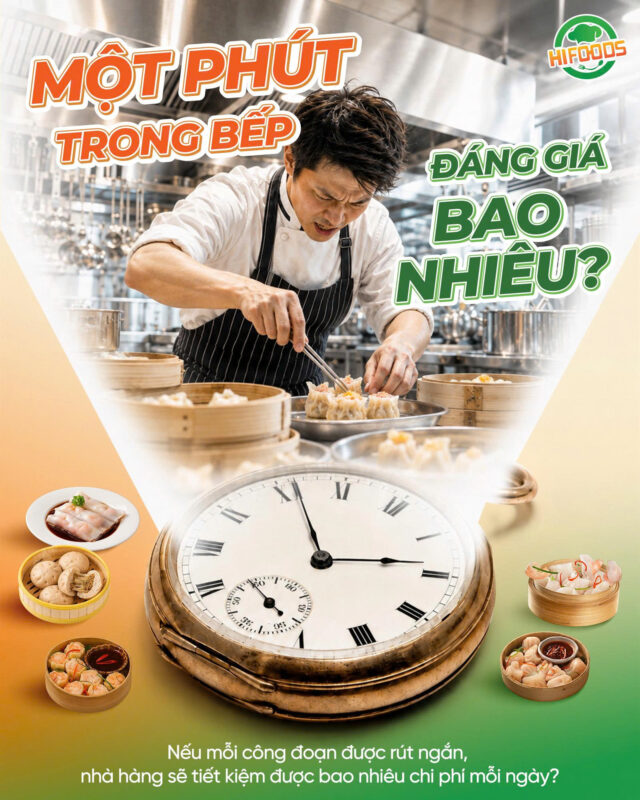
Optimizing F&B operations does not only start with controlling ingredient prices or cutting personnel costs. In fact, one of the important resources that is often overlooked is time. A minute in the kitchen can mean a table of guests being served earlier, a delivery order being completed on time, or an opportunity to serve additional customers during peak hours.
So how much is a minute in the kitchen really worth?
The answer is not simply 60 seconds. When a small amount of time is repeated hundreds of times each day, it can become a significant part of the operational performance of the entire restaurant. This is also why modern F&B businesses are increasingly interested in optimizing cooking times, shortening processes, and improving kitchen productivity rather than just focusing on increasing the number of staff.
WHERE IS TIME IN THE KITCHEN BEING WASTED?
When evaluating kitchen performance, many businesses often pay attention to cooking times. However, before a dish is brought to the guest’s table, staff may have to perform many other steps such as preparing ingredients, preliminary processing, portioning, marinating, arranging ingredients, and preparing for each shift.
Each step may only take a few minutes and seems insignificant when viewed individually. But when multiplied by dozens of dishes and hundreds of orders each day, the total time can become a significant operational cost. Especially when customer volume spikes during peak hours, these steps can easily become bottlenecks that slow down the entire process.
Therefore, the important question for businesses is not just how to make employees work faster, but how to eliminate unnecessary steps and use staff time more effectively.
PEAK HOURS ARE A RIGOROUS TEST FOR A KITCHEN
6:30 PM. Guests begin to fill the tables, delivery orders continuously come down to the kitchen, and preparation areas operate at nearly full capacity. This is the time when every weakness in the operational process quickly reveals itself.
An ingredient that is not prepared in time can delay a dish. A step that requires too many actions can affect a series of subsequent orders. When staff have to prepare ingredients while also handling dishes, the pressure in the kitchen increases and service speed begins to decline.
For restaurants, buffets, hotels, F&B chains, or cloud kitchens, this issue does not only affect personnel. Guests have to wait longer, table turnover may decrease, delivery orders risk being late, and customer experience is impacted.
That is why optimizing dish delivery times is increasingly becoming an important part of the restaurant operation optimization puzzle.
OPTIMIZING TIME DOES NOT MEAN SACRIFICING QUALITY
An F&B model cannot simply require chefs to work faster to increase service speed. Speed needs to go hand in hand with quality and consistency. If a dish is served quickly but the flavor is inconsistent, the customer experience is still affected. If staff continuously have to work in an overloaded state, operational efficiency is also difficult to maintain in the long term.
The solution lies in standardizing the steps that can be standardized. When ingredients and products are prepared to standards from the beginning, the kitchen can reduce repetitive actions, better control portions, and focus on the steps that truly add value to the dish.
This is also why standardized food and semi-finished products are increasingly attracting the attention of many F&B models. Instead of starting everything from raw ingredients, businesses can use products that have been standardized in specifications, portions, and production processes, thereby shortening preparation time while maintaining dish quality.
HI-FOODS – STANDARDIZED FOOD SOLUTIONS FOR F&B OPERATIONS
With the goal of providing comprehensive food solutions, HI-FOODS develops a product ecosystem serving various business models such as restaurants, buffets, hotels, HORECA, F&B chains, cloud kitchens, and delivery.
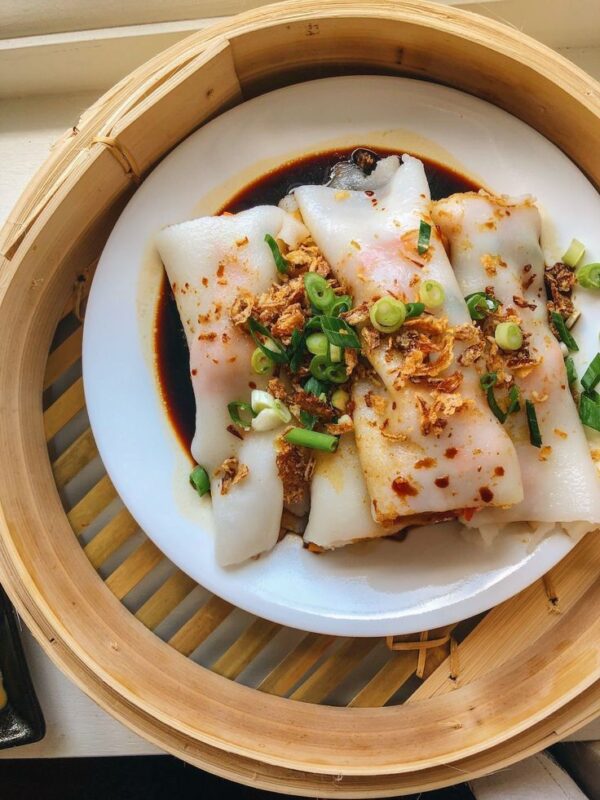
HI-FOODS’ dimsum and standardized food lines are developed to help businesses shorten many steps in the cooking and serving process. With many products, the completion time can be as short as 5–10 minutes, depending on the product and cooking method, helping the kitchen be more proactive during peak order times.
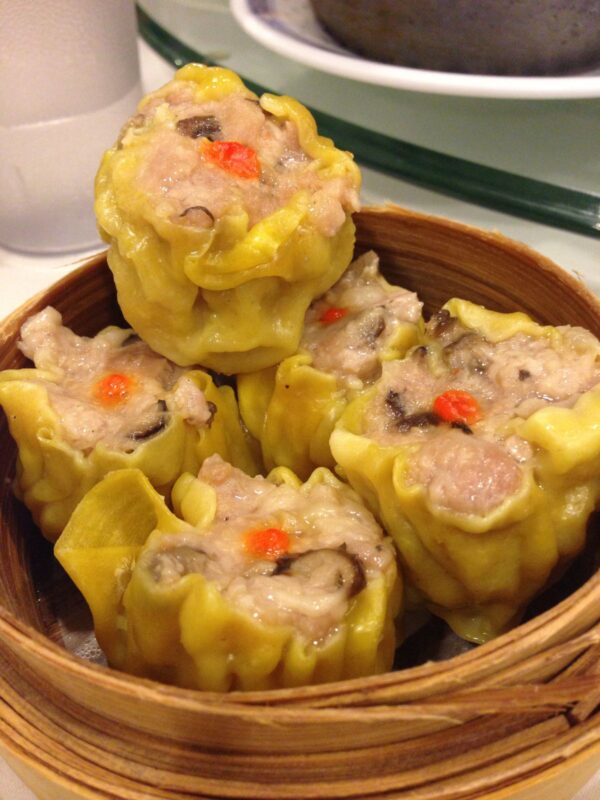
In addition to speed, stability is also an important factor. Products standardized in specifications and portions help businesses better control quality between cooking sessions and shifts. This is a particularly important foundation for F&B chains or models planning to expand to multiple outlets.
WITH OVER 1,000 SKUs, HI-FOODS IS MORE PROACTIVE IN MENU BUILDING
Another challenge for F&B businesses is how to expand the menu without complicating the operational process. With an ecosystem of over 1,000 SKUs, HI-FOODS offers a diverse range of product groups, from dimsum, pizza, calzone to chilled items, ready-to-eat, and many other food lines.
The diverse catalog provides businesses with more options when building menus, developing new dishes, or adding products according to market demand. At the same time, using standardized products from a single supplier helps businesses reduce complexity in ingredient management and kitchen processes, especially for models with high output or multiple outlets.
A SAVED MINUTE CAN CREATE GREATER VALUE
If a step is shortened by a few minutes on one order, the value created from that order may not be significant. But when a restaurant serves hundreds of orders each day, the saved time will continuously accumulate.
This could mean additional serving capacity during peak hours, reduced pressure on kitchen staff, increased order processing capability, and shortened wait times for customers. For models with a large customer volume, just a few optimized minutes in each process can create a significant difference in productivity.
Therefore, optimizing time in the kitchen is not just about optimizing a few minutes of cooking. It is about optimizing the operational capacity of the entire system.
CHEFS NEED TO FOCUS ON WHAT THEY DO BEST
Optimizing operations does not mean diminishing the role of chefs. On the contrary, when repetitive tasks are standardized, chefs have more time to focus on values that require expertise and experience, such as flavor control, dish finishing, creativity, and enhancing customer experience.
A skilled team of chefs combined with standardized products will create a more efficient operational model. The products provide a stable foundation, processes help save time, while the chefs’ skills add a unique touch to the dishes.
This is not about replacing people with products, but rather how businesses allocate resources correctly and allow each staff member to focus on tasks that create the highest value.
OPTIMIZING EVERY MINUTE, ENHANCING OPERATIONAL EFFICIENCY
In the F&B industry, not all costs are clearly visible in reports. There are costs hidden in waiting times, repetitive actions, underutilized productivity, or missed serving opportunities during peak hours.
Therefore, optimizing F&B operations needs to be viewed as a holistic problem, where time, personnel, ingredients, processes, and supplies need to be interconnected.
With large-scale production capacity, a diverse product ecosystem, and standardized food solutions, HI-FOODS accompanies businesses on the journey to shorten cooking times, reduce kitchen pressure, stabilize quality, and enhance operational efficiency.
Because in F&B, a minute may just be a minute. But when that minute is multiplied hundreds of times a day, the value created can be completely different.
HI-FOODS – MORE THAN A SUPPLIER, PROVIDING COMPREHENSIVE FOOD SOLUTIONS.


