

5 CRITERIA FOR CHOOSING A RELIABLE FOOD OEM PARTNER
Having a potential product idea is just the beginning. To turn that idea into a product with stable quality, market suitability, and long-term growth potential, a business needs a capable food OEM partner.
In reality, choosing an OEM partner should not be based solely on quotes or the ability to produce a specific product. A suitable partner needs to have capabilities ranging from research and development, production, quality control to customization and support throughout the product lifecycle.
So what criteria should a business use to evaluate a food OEM partner?
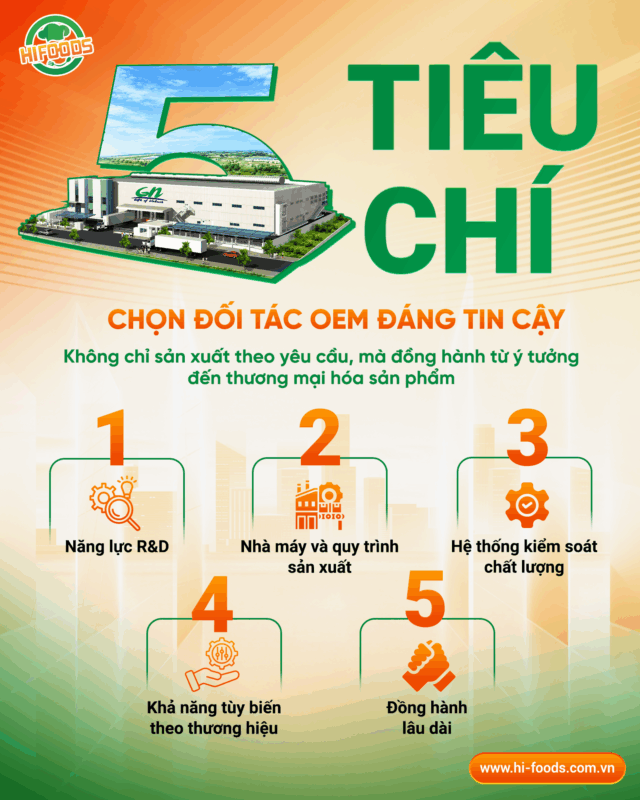
1. FOOD OEM PARTNER WITH REAL R&D CAPABILITIES
A product idea only creates value when it can be transformed into a product that meets market needs.
Therefore, R&D capability is one of the most important criteria when choosing an OEM partner. The partner not only needs the ability to follow existing formulas but also needs to understand the ingredients, processing technology, flavors, textures, and product characteristics to collaborate with the business in perfecting the formula.
The R&D process may include researching ingredients, testing formulas, adjusting flavors and textures, evaluating products, and continuously improving based on market feedback.
With HI-FOODS, the R&D capability at GN FOODS factory is the foundation for accompanying businesses from the initial idea to the finished product, while also developing new products that align with brand direction and the needs of each segment.
2. FOOD OEM PARTNER NEEDS A STRONG FACTORY AND PRODUCTION CAPACITY
A product may succeed on a trial scale but may not be ready for mass production.
When choosing an OEM partner, businesses need to pay attention to the scale of the factory, capacity, production technology, ability to scale output, and the level of standardization of the process.
This is particularly important when the product begins to grow. If production capacity cannot keep up with demand, businesses may face stock shortages, extended delivery times, or difficulties in maintaining consistent quality.
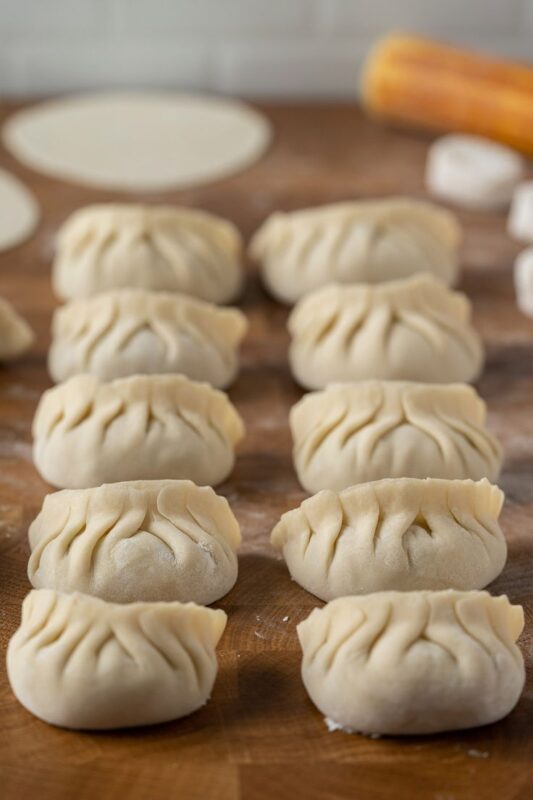
The manufacturing foundation of GN FOODS with large capacity, modern production systems, and standardized processes enables HI-FOODS to accompany businesses from product development to commercial-scale production.
3. FOOD OEM PARTNER MUST HAVE CONSISTENT QUALITY CONTROL
With food products, quality cannot only be checked at the finished product stage.
A reliable OEM system needs to control quality throughout the entire process, from raw materials, production, storage to packaging and finished products. The more standardized the process, the higher the ability to maintain quality between production batches.
For brands, this is particularly important because customers expect today’s product to have a similar experience to the product they used before.
Therefore, when choosing a food OEM partner, businesses need to look beyond a sample product and understand the quality control capabilities behind that product.
4. FOOD OEM PARTNER NEEDS TO BE FLEXIBLE ACCORDING TO BRAND REQUIREMENTS
There is no one-size-fits-all formula for all brands.
An OEM product may need adjustments in flavor, ingredients, size, dosage, packaging specifications, or price segments to align with business strategies.
Therefore, the ability to customize is a crucial factor that helps businesses create products with a unique signature rather than just choosing an existing product on the market.
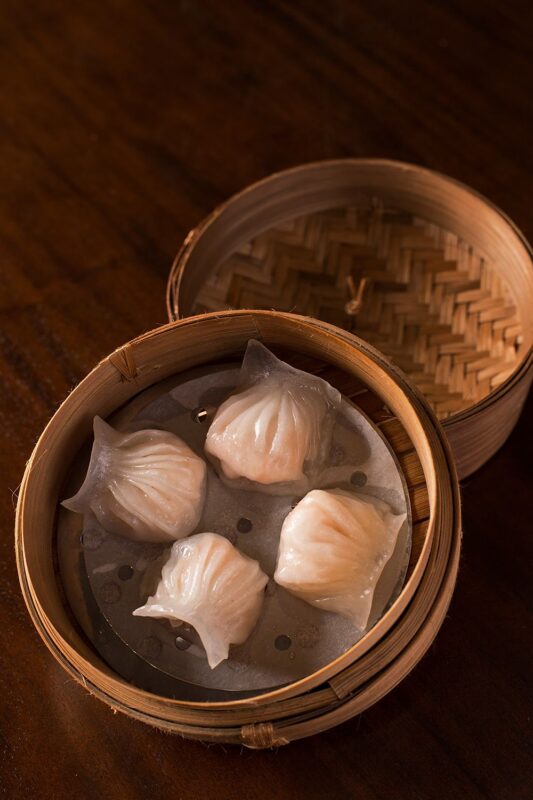
With HI-FOODS’ OEM solutions, businesses can directly discuss product direction and actual needs to jointly develop suitable solutions, from formulas, product characteristics to production specifications.
5. FOOD OEM PARTNER CAN ACCOMPANY AFTER PRODUCT LAUNCH
OEM should not end at the time the product is shipped.
During the business process, products may need improvements, adjustments based on consumer feedback, or the development of new versions. As the brand expands, the demand for output, product categories, and specifications also changes.
A good OEM partner needs to be able to accompany throughout that process.
This is also the direction HI-FOODS pursues: not only providing production capacity but becoming a long-term product development partner, connecting R&D, production, and market understanding to help businesses build a product portfolio with growth potential.
HI-FOODS – OEM SOLUTIONS FROM IDEA TO PRODUCT
A successful OEM product requires more than just a factory capable of processing. It is a combination of R&D, production technology, quality control, customization capabilities, and stable supply capacity.
With a manufacturing foundation from GN FOODS and an experienced R&D team, HI-FOODS aims to become a partner accompanying businesses throughout the entire product development journey: from ideas, formula research, testing, refinement to large-scale production.
Choosing the right OEM partner not only helps businesses create a product. More importantly, it is a way to build a foundation for the product to go far and for the brand to develop sustainably.
HI-FOODS – More than just a supplier, providing comprehensive food solutions.


