

5 FACTORS THAT DETERMINE THE SUCCESS OF AN OEM PRODUCT
OEM products are increasingly becoming the choice of many F&B businesses, retailers, and food brands when they want to quickly develop their own products without having to invest in a complete production system. However, not all OEM products succeed in the market.
Some products are quickly embraced by consumers, becoming an important part of the business portfolio. But there are also products that, despite being invested in terms of appearance and formula, still struggle to make an impact, even disappearing shortly after their launch.
What makes the difference?
Behind a successful OEM product is not just the ability to produce. It is the combination of research and development capabilities, production technology, customization according to requirements, and especially market understanding.
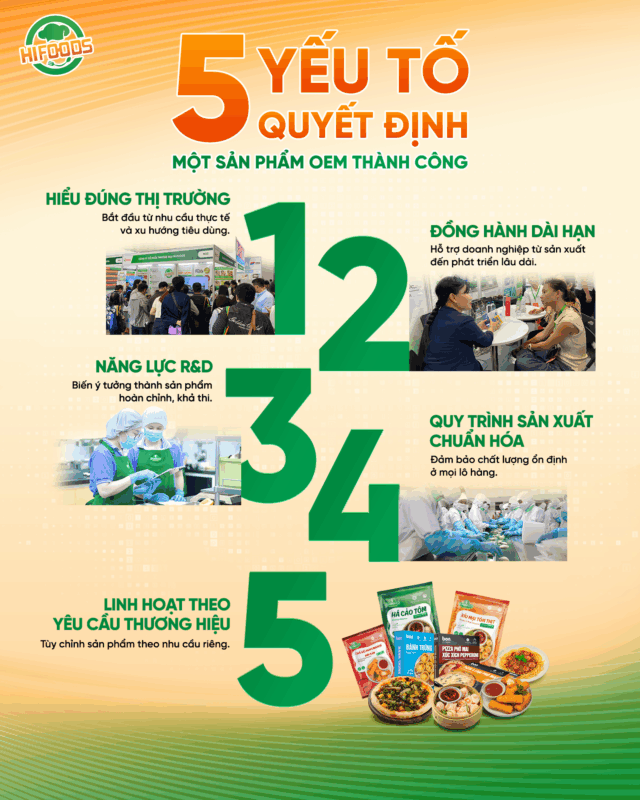
With the manufacturing foundation of GN FOODS along with the R&D capabilities and market experience of HI-FOODS, the OEM development process is approached from both angles: products that can be produced well and products that can meet business needs.
So what are the 5 factors that businesses need to consider when choosing food OEM solutions?
1. UNDERSTAND THE MARKET – THE FOUNDATION OF OEM PRODUCTS
A product, no matter how modern its production technology, will struggle to succeed if it does not meet the market’s needs.
Therefore, the development process of OEM products needs to start with clearly identifying who the product is for, what needs it serves, and which segment it is positioned in. Businesses need to consider consumer behavior, market trends, appropriate pricing, and the gaps that the new product can exploit.
Especially in the food and F&B industry, consumer tastes change rapidly. A product may be suitable for one customer group but not necessarily for another. The same idea, when implemented for restaurants, retail chains, or export markets, may also require different standards.
Therefore, understanding the market before developing a product helps businesses reduce the risk of investing in a product that is hard to commercialize and creates a better foundation for the R&D process.
A good OEM product is not simply a product that the factory can produce, but must be a product that the market truly needs.
2. R&D CAPABILITY – TURNING IDEAS INTO REAL PRODUCTS
A product idea can start from a trend, a customer need, or a desire to create differentiation for the brand. However, the journey from idea to a product that can be produced consistently is a completely different journey.
This is when the food R&D capability plays an important role.
The research process may include selecting ingredients, building formulas, testing, evaluating flavors, textures, dosages, and adjusting products according to business goals. A suitable formula at the experimental scale also needs to be re-evaluated when transitioning to large-scale production to ensure stability.
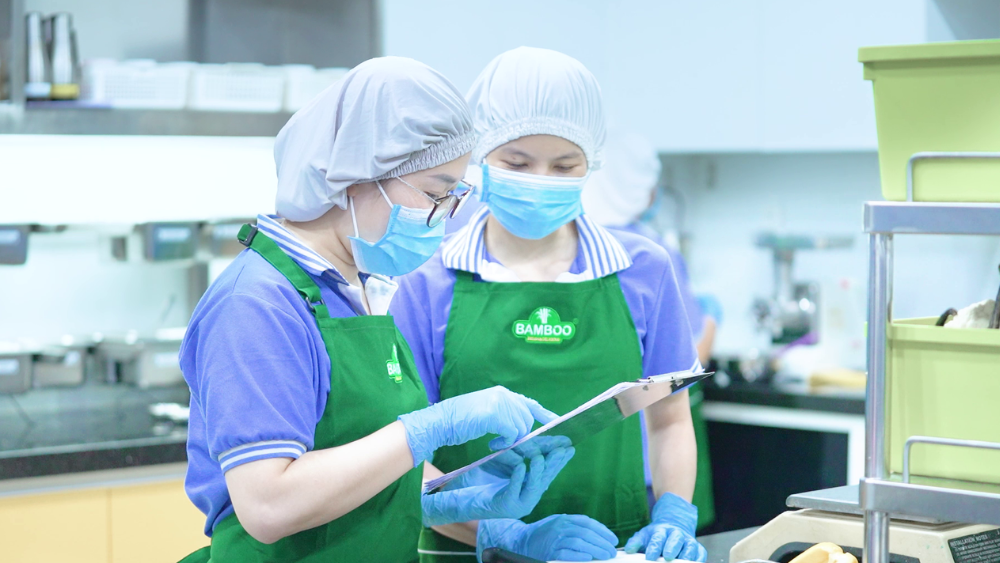
At GN FOODS, the R&D team has experience in product research and development, and is capable of directly coordinating with the production system to bring formulas from the experimental stage to actual production.
For businesses, this is particularly important because a food OEM partner not only needs to “produce the product,” but also needs to have the ability to help businesses solve the problem from idea to commercial finished product.
3. STANDARDIZED PRODUCTION PROCESS – ENSURING CONSISTENT QUALITY
One of the biggest challenges of OEM production is maintaining stable quality when products are produced on a large scale.
Customers do not just expect the product to be good the first time. They expect the second, third purchase, or products sold at another point of sale to provide a similar experience.
This requires the production process to be standardized from input materials, dosages, processing, temperature control to packaging and storage. Quality control standards need to be established throughout the process rather than just checking at the final step.
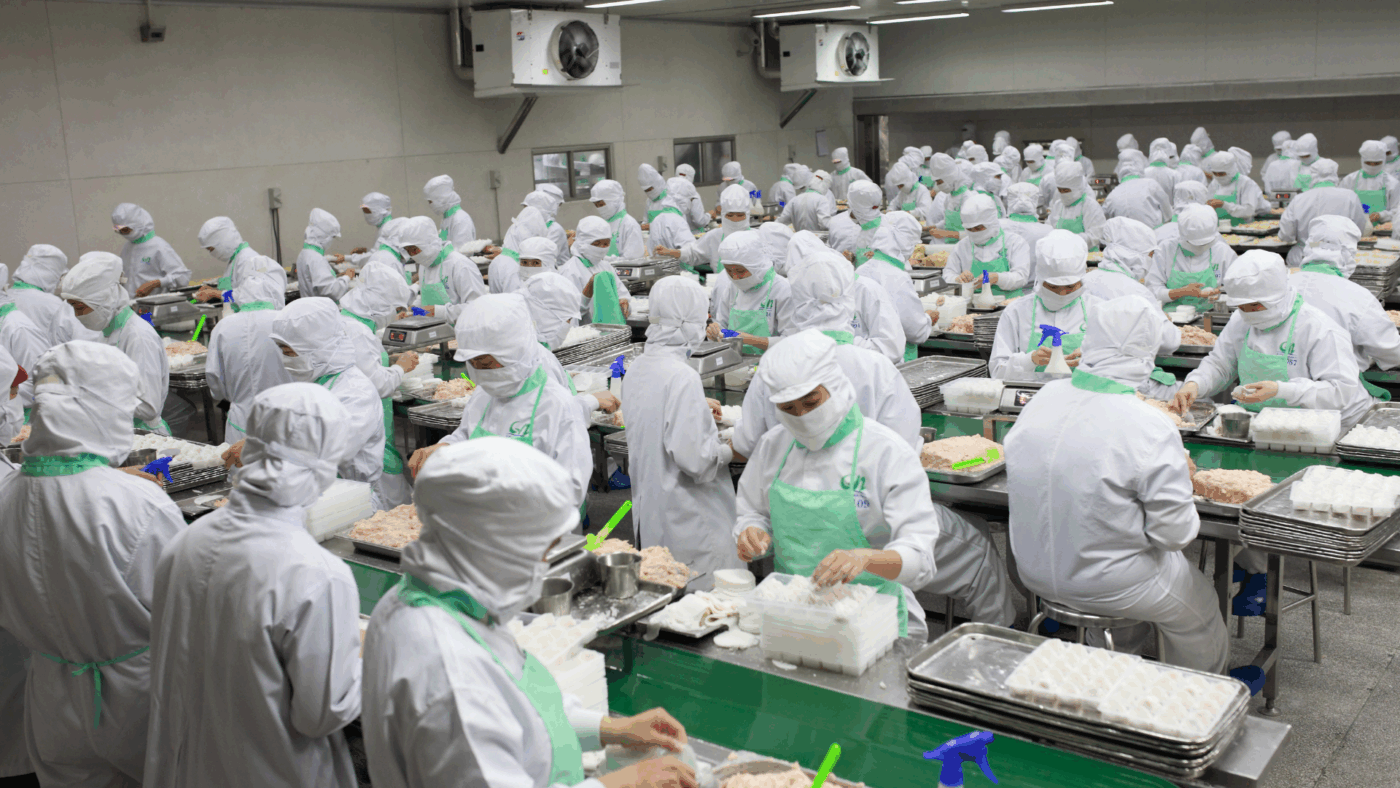
GN FOODS’ large-scale production capacity, combined with a quality control system and modern processing technology, creates a foundation for OEM products to maintain consistency between production batches.
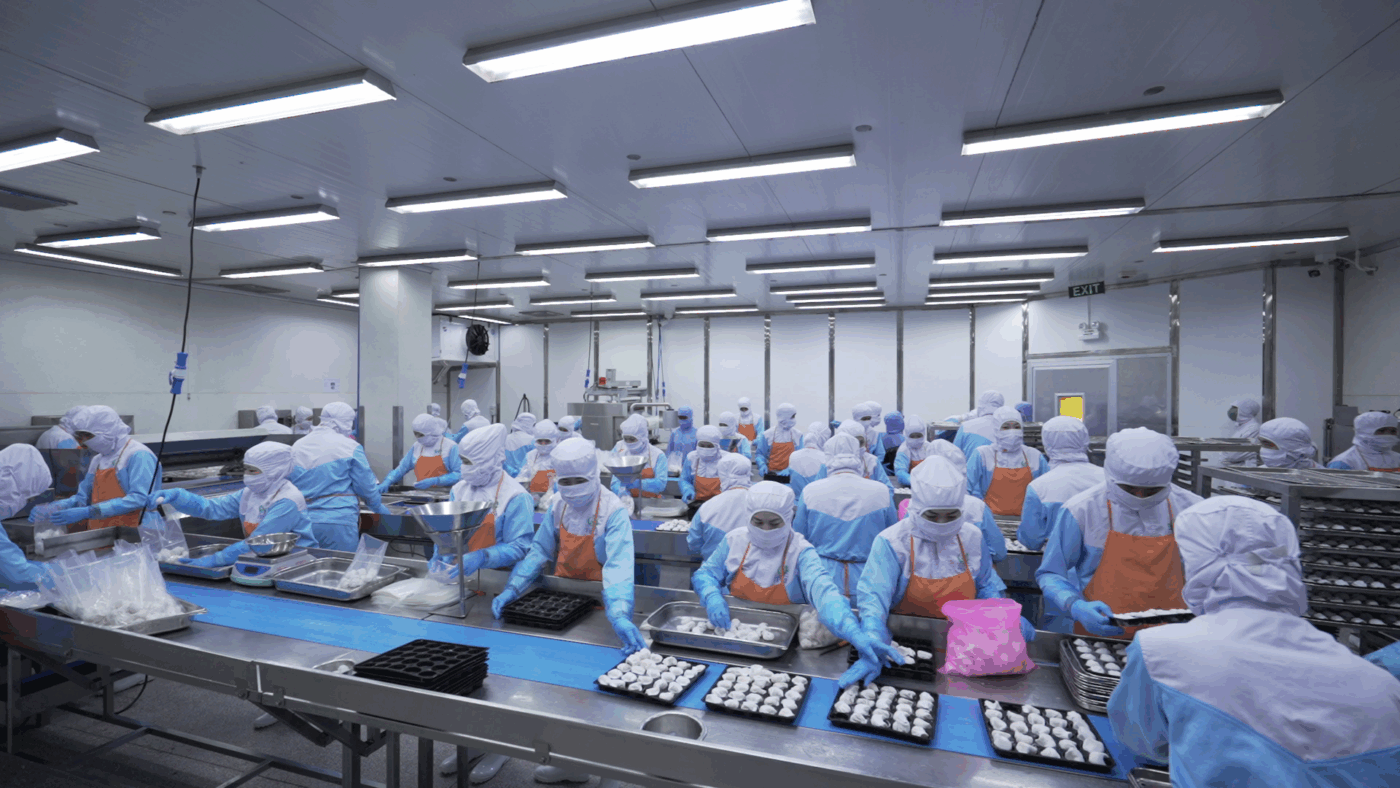
Because in the food business, stable quality is not just a technical requirement. It is also a direct factor protecting customer experience and brand reputation.
4. FLEXIBILITY FOR EACH BRAND – NO ONE-SIZE-FITS-ALL FORMULA
Each business has a different brand positioning, customer group, and business strategy. Therefore, an effective OEM solution should not stop at using an available formula and changing the packaging.
Depending on the needs, businesses may need to adjust formulas, flavors, textures, dosages, product sizes, packaging specifications, or price segments.
For example, a product for a restaurant chain may prioritize stability, processing speed, and operational capability. Meanwhile, a product for retail may need to focus more on packaging specifications, portion sizes, consumer experience, and shelf life.
Therefore, OEM solutions need to be flexible enough to adapt to each business model while ensuring that products are produced to a consistent standard.
This is also the difference between simply outsourcing products and an OEM product development solution that accompanies the brand.
5. LONG-TERM PARTNERSHIP – OEM DOES NOT END WITH THE FIRST ORDER
A product that is completed and delivered to the business does not mean that the OEM process has ended.
The market is constantly changing. Consumer trends change. Formulas may need improvement. The product portfolio needs to be expanded. The brand may also move into a new segment or market.
Therefore, a capable OEM partner needs to have the ability to accompany businesses in improving products, developing new SKUs, expanding the portfolio, and adjusting products according to new market requirements.
For HI-FOODS, OEM is not just about producing on demand. It is a process of accompanying businesses from idea – research – development – production – product completion – portfolio expansion.
HI-FOODS – FOOD OEM SOLUTIONS FROM IDEA TO PRODUCT
A successful OEM product requires more than just a capable factory. Businesses need a partner who can take a comprehensive view from the market, product to production capacity and long-term development capabilities.
With the combination of HI-FOODS and GN FOODS, businesses can access an ecosystem of capabilities including R&D, large-scale production, quality control, product development according to requirements, and experience in the food – F&B market.
In particular, the R&D capability with over 50 new products developed each year is the foundation for HI-FOODS and GN FOODS to accompany businesses in realizing new product ideas.
From an initial idea, the product is researched and refined to fit the brand orientation, then transformed into a scalable production process that maintains consistent quality.
5 FACTORS, BUT ONE GOAL: CREATING PRODUCTS WITH LONG-TERM GROWTH POTENTIAL
The success of an OEM product does not come from a single factor. Understanding the market helps determine the right direction. R&D turns ideas into products. Standardized production ensures consistent quality. Customization capability helps products fit each brand. And long-term partnership creates a foundation for products to continue developing alongside the business.
That is also how HI-FOODS approaches OEM solutions: not just producing a product on demand, but working with businesses to build a product that meets the market and develops sustainably.
Do you have a unique product idea and are looking for an OEM food partner with R&D, production, and quality standardization capabilities?
Contact HI-FOODS to discuss product development needs and find OEM solutions that align with your business direction.


