


FOOD COST IS NOT JUST THE PURCHASE PRICE: IS YOUR BUSINESS CONTROLLING COSTS OR JUST MANAGING INVOICES?
Does a cheap ingredient necessarily mean a high-profit dish? Not exactly.
When calculating food costs, many restaurant owners usually start with the purchase price of raw materials. If their buying price is lower than their competitors’, they assume their profit margins will be higher. However, by the end of the month, the business results do not accurately reflect those expectations.
This happens because food cost does not just lie on the purchasing invoice; it is also determined by the entire operational process behind the kitchen.
From storage, preliminary preparation, portioning, and cooking to serving, every single stage can generate costs that businesses find very difficult to recognize if they only look at the ingredient price.
That is also the reason why more and more F&B businesses are shifting from a “buy cheaper ingredients” mindset to “controlling total operational costs” to optimize profits in a sustainable way.
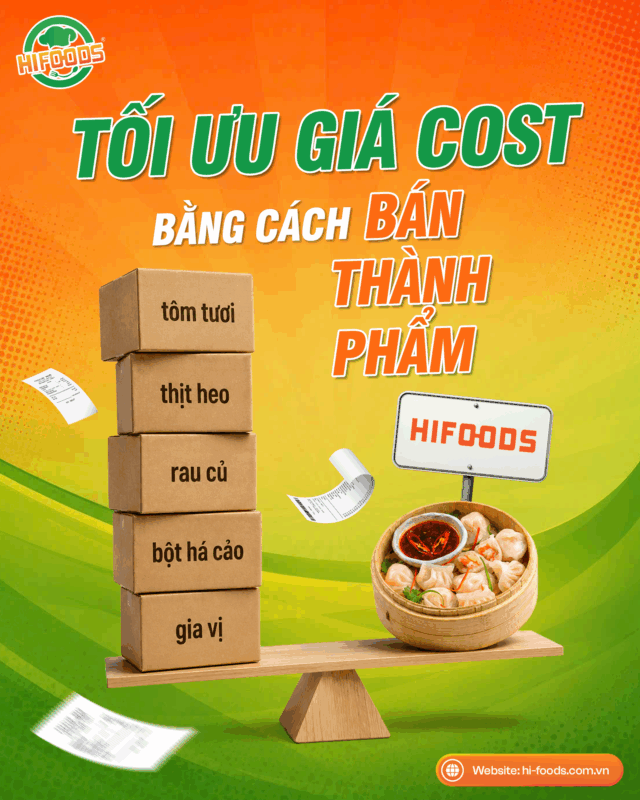
FOOD COST INCLUDES MORE “HIDDEN” COSTS THAN BUSINESSES THINK
In reality, the purchase price of raw materials is only one part of the food cost.
The remaining costs often come from daily losses that occur during kitchen operations but are highly difficult to measure accurately.
Ingredients can be lost during preliminary preparation due to trimming unused parts or uneven portioning. Some raw materials must be discarded because they are stored at improper temperatures or kept in inventory for too long. Every chef and every shift might use a different amount of ingredients for the exact same dish, leading to inconsistent portions and continuously fluctuating costs.
In addition, businesses must invest significantly in labor to handle preliminary preparation, portioning, and ingredient prepping before peak hours. The more complex the process, the more labor costs and operational time increase.
If these factors are not controlled, actual profits will be much lower than what the business calculates on paper.
SEMI-FINISHED FOOD SOLUTIONS HELP CONTROL FOOD COST AT THE SOURCE
To solve this problem, many restaurant systems, F&B chains, and HORECA models are turning to semi-finished food solutions as a way to optimize food costs right from the start.
Unlike raw materials, semi-finished products are already standardized in terms of recipes, portion sizes, and production processes. This helps businesses significantly reduce material waste while accurately controlling the cost of each individual portion.
Businesses no longer need to spend a lot of time on complex preparation stages, thereby relieving pressure on staff and improving operational efficiency.
More importantly, when every product has a stable portion size, businesses can set selling prices, calculate profits, and forecast food costs with much higher accuracy.
SEMI-FINISHED FOOD SOLUTIONS HELP OPTIMIZE RESTAURANT OPERATIONAL COSTS
In addition to controlling food costs, semi-finished products also bring many benefits to operational management.
Dish preparation times are significantly shortened, helping the kitchen serve faster during peak hours while still maintaining consistent quality. Staff no longer need to spend a lot of time on repetitive tasks, allowing them to focus more on finishing dishes and enhancing the customer experience.
Thanks to standardized processes, businesses also reduce the pressure of training new employees, minimize errors during preparation, and easily maintain uniform quality across different shifts as well as various branches.
This is a particularly crucial factor for buffet concepts, takeaways, cloud kitchens, catering, or restaurant chains that are expanding their scale.
HI-FOODS PROVIDES SEMI-FINISHED SOLUTIONS TO HELP BUSINESSES CONTROL FOOD COST EFFECTIVELY
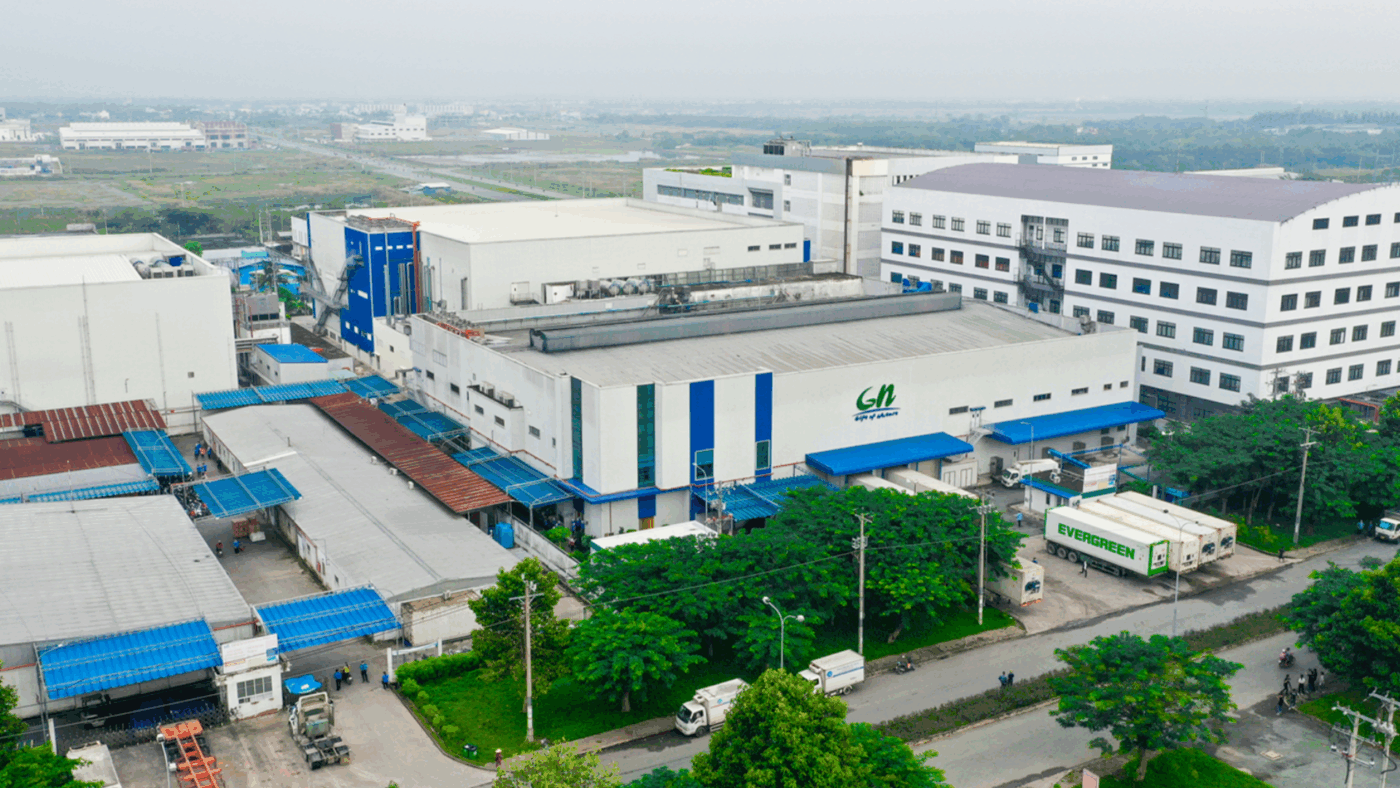
With production capabilities from the GN FOODS factory and a diverse ecosystem dedicated to HORECA, HI-FOODS delivers semi-finished food solutions that help businesses optimize costs and enhance business efficiency.
Products are manufactured according to standardized processes, which helps maintain consistent quality across batches, reduces material waste, and supports businesses in maintaining a stable food cost over the long term.
In addition to a stable supply chain, HI-FOODS also provides a diverse product portfolio tailored to many different business models—ranging from restaurants, hotels, and buffets to F&B chains and modern retail systems.
As a result, businesses can shorten preparation times, accelerate dish serving speeds, reduce operational pressure, and focus more on customer acquisition as well as business expansion.
OPTIMIZING FOOD COST MEANS OPTIMIZING THE ENTIRE OPERATIONAL SYSTEM
In a business climate where material, labor, and rental costs are continuously rising, businesses can no longer compete solely by searching for cheap supply sources.
A sustainable advantage comes from the ability to control the entire operational system—from raw ingredients and production processes to service speeds, waste ratios, and labor efficiency.
That is also the reason why semi-finished food solutions are increasingly chosen by many businesses. It is not to compromise on food quality, but to build an operational model with more stable food costs, more transparent expenses, higher performance, and more sustainable profits.
If your business is looking for a solution to control food costs effectively, optimize operational expenses, and proactively manage your supply chain, HI-FOODS is ready to partner with you through our ecosystem of standardized products and large-scale production capabilities, meeting the demands of various HORECA models and modern F&B chains.


