


Is dimsum “hot” because of a passing trend, or is it truly becoming a product group with long-term growth potential in the F&B industry?
While dimsum used to be associated primarily with Chinese restaurants, this product group has now appeared in many models and at various consumption times: from breakfast, snacks, buffets, hotels, cafés to convenience stores, delivery, and home consumption.
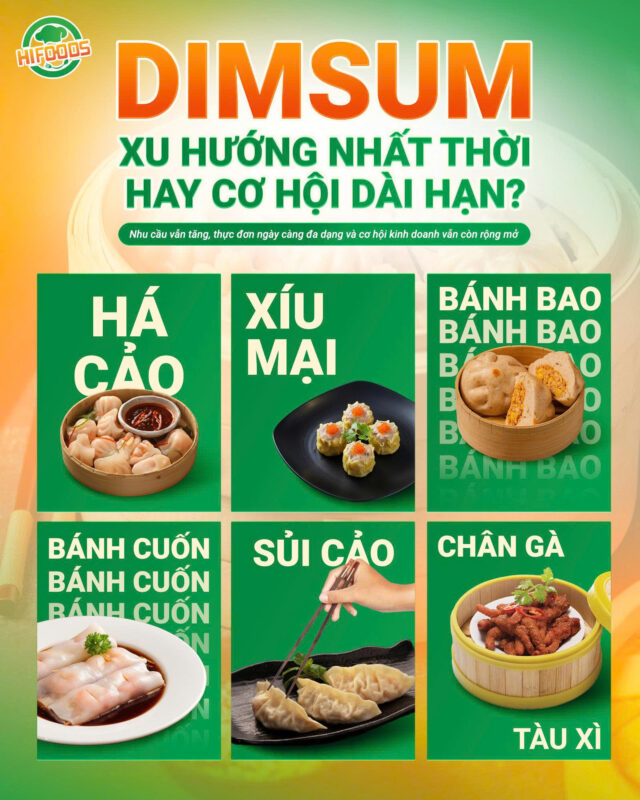
The expansion of sales points and consumer demand shows that dimsum is not just benefiting from a culinary trend. More importantly, this is a product group that has the ability to adapt to various business models and operational challenges.
How is dimsum changing in the F&B industry?
One notable change in the market is that dimsum is no longer simply positioned as a characteristic dish of Chinese cuisine.
Today, businesses can incorporate dimsum into many models with different serving methods:
| F&B Model | Role of Dimsum |
|---|---|
| Restaurant | Appetizer, additional dish, or main dish group |
| Buffet | Diverse options, easy to add to the food line |
| Hotel | Serves breakfast buffet, parties, and room service |
| Café | Breakfast, snacks, light meals |
| Convenience Store | Convenient products, easy to prepare and serve |
| Delivery | Quick menu, easy to package and transport |
| Home Consumption | Quick and convenient meal solutions |
The more models that can be applied, the less dimsum’s opportunities depend on a single segment.
4 reasons dimsum can become a long-term opportunity
1. Dimsum meets various needs and consumption times
A significant advantage of dimsum is its flexibility in usage timing.
Dimsum can appear at breakfast, lunch, snacks, parties, buffets, or become an option for quick meals at home.
This helps businesses not be limited by a single “sales hour,” while also providing more ways to build menus and tap into customer demand.
2. Dimsum helps shorten service time
In F&B, service speed is becoming an increasingly important factor, especially during peak hours.
With standardized dimsum products, businesses can significantly reduce the preparation and cooking processes in the kitchen. Products only need to be cooked according to the appropriate process before serving.
Fewer steps – simpler operations – optimized serving time.
This is why dimsum is particularly suitable for models with high customer traffic or fast service requirements.
3. Dimsum is flexible in menu construction
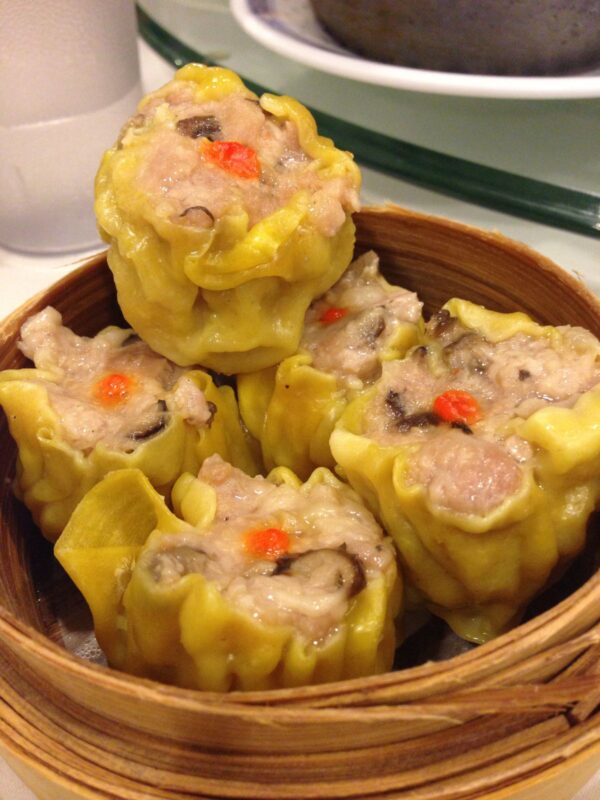
From dumplings, siu mai, buns to many other dimsum varieties, businesses can easily integrate products into different menu models.
Instead of using dimsum as an independent dish group, businesses can transform it into:
- Breakfast set
- Quick meal combo
- Buffet menu
- Shared set
- Light meals at cafés
- Delivery combo
One product group – many ways to exploit the menu.
This is the factor that helps dimsum adapt well when business models change.
4. Standardized dimsum simplifies operational challenges
If market demand determines “what to sell,” then operational capability determines “how much can be sold.”
Standardized dimsum products help businesses better control factors such as portioning, cooking time, product quality, and kitchen operations.
| Operational Challenges | Benefits of Standardized Dimsum |
|---|---|
| Preparation | Reduces preparation steps |
| Staff | Reduces dependence on individual skills |
| Time | Optimizes operations and serving time |
| Quality | Maintains consistency between servings |
| Menu Expansion | Easier to add more dishes |
| Model Replication | Easier to standardize processes across sales points |
When these factors are well controlled, dimsum is not only an “easy-to-sell” dish but also becomes a solution that fits modern F&B operations.
Dimsum supply: a decisive factor for long-term growth potential
A product group can become a long-term opportunity not only depending on market demand.
For F&B businesses, the more important question is:
Is the supply stable enough to accompany the growth rate?
As the number of sales points increases, demand also changes accordingly. Businesses need a supply that can simultaneously meet multiple requirements: product diversity, consistent quality, stable sourcing, and scalability according to business size.
This is also why choosing a dimsum supplier should not stop at the question “Is the product tasty?”, but should look broader at production capacity and long-term partnership potential.
HI-FOODS – dimsum supply solution for F&B businesses
With a portfolio of over 1,000 SKUs, HI-FOODS offers a diverse ecosystem of dimsum products, helping businesses easily choose and build menus suitable for each business model.
The products are oriented towards the criteria of standardization, consistency, and ease of implementation, helping businesses reduce operational pressure while still having the ability to diversify their menus.
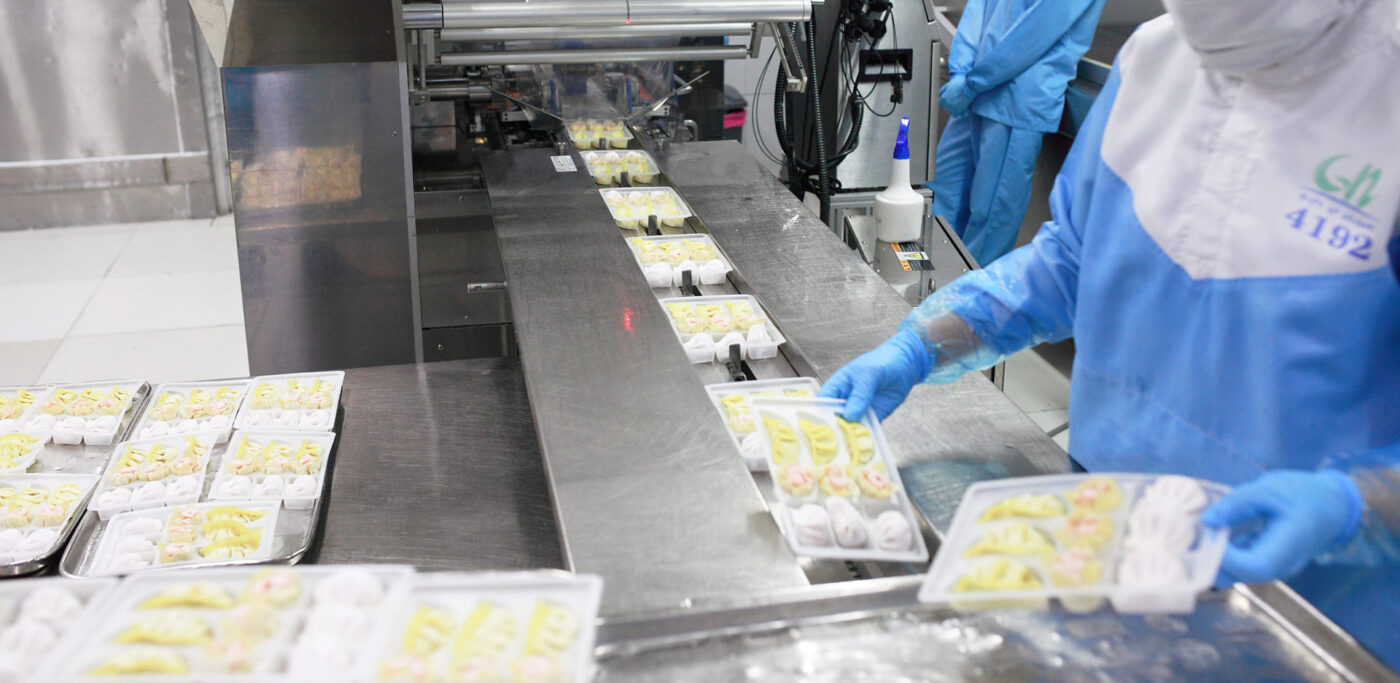
In particular, large-scale production capacity from GN FOODS provides a foundation for HI-FOODS to meet supply needs for various F&B models, from restaurants, hotels, buffets to cafés and retail channels.
Diverse portfolio + standardized products + stable supply capacity = foundation for businesses to exploit dimsum in a long-term direction.
Is dimsum a trend or a long-term opportunity?
Dimsum may start from a trend, but the ability to adapt is the decisive factor for the longevity of a trend in business.
When a product group can appear in many models, serve various consumption times, be easy to implement, and fit operational challenges, its growth opportunities will no longer depend entirely on the market’s “hotness.”
Therefore, the question should not only be:
“Is dimsum still hot?”
But should be:
“Is your model ready to exploit dimsum as a long-term business opportunity?”
FAQ – Frequently Asked Questions about dimsum business
Is dimsum suitable for restaurants?
Yes. Dimsum can be implemented in many restaurant models, from specialized Chinese restaurants to modern restaurants, buffets, and fast-service F&B models.
Is dimsum suitable for cafés and convenience stores?
Yes. With the advantage of being easy to prepare and serve quickly, dimsum can become a group of breakfast, snack, or additional items on the menu of cafés, convenience stores, and fast-food models.
Why should businesses use standardized dimsum?
Standardized dimsum helps reduce preparation steps, simplify kitchen operations, limit dependence on individual skills, and support maintaining consistent quality.
What should dimsum businesses pay attention to besides product quality?
In addition to quality, businesses should evaluate supply capacity, stability of sourcing, product portfolio, scalability, and support capabilities from suppliers.
Does HI-FOODS provide a variety of dimsum products?
HI-FOODS has a diverse product portfolio with over 1,000 SKUs, meeting various needs from HORECA to retail and different F&B models.
Is dimsum just a passing trend?
Not necessarily. The ability to apply in many models, at various consumption times, and its suitability for operational needs helps dimsum have the potential to become a product group with long-term development.
Dimsum may be a trend. But with the right supply, it can become part of the long-term growth strategy of F&B businesses.
HI-FOODS – Accompanying businesses from product portfolio to supply solutions.


