


How to Thaw Pizza Dough to Keep It Crispy and Not Soggy
Pizza that becomes soggy, doughy, has a hard crust, or loses its perfect puffiness is largely not due to the topping recipe or the skill of the baker, but originates from the very first preparation step. Incorrectly applying the thawing method for pizza dough will cause water to condense on the surface of the dough, break down the gluten structure, and result in a product that completely loses its standard crispiness. Hi-foods shares a detailed guide on the proper thawing technique for pizza dough right below — the secret to maintaining the smooth, delicious, and crispy crust as if it just came out of the oven!
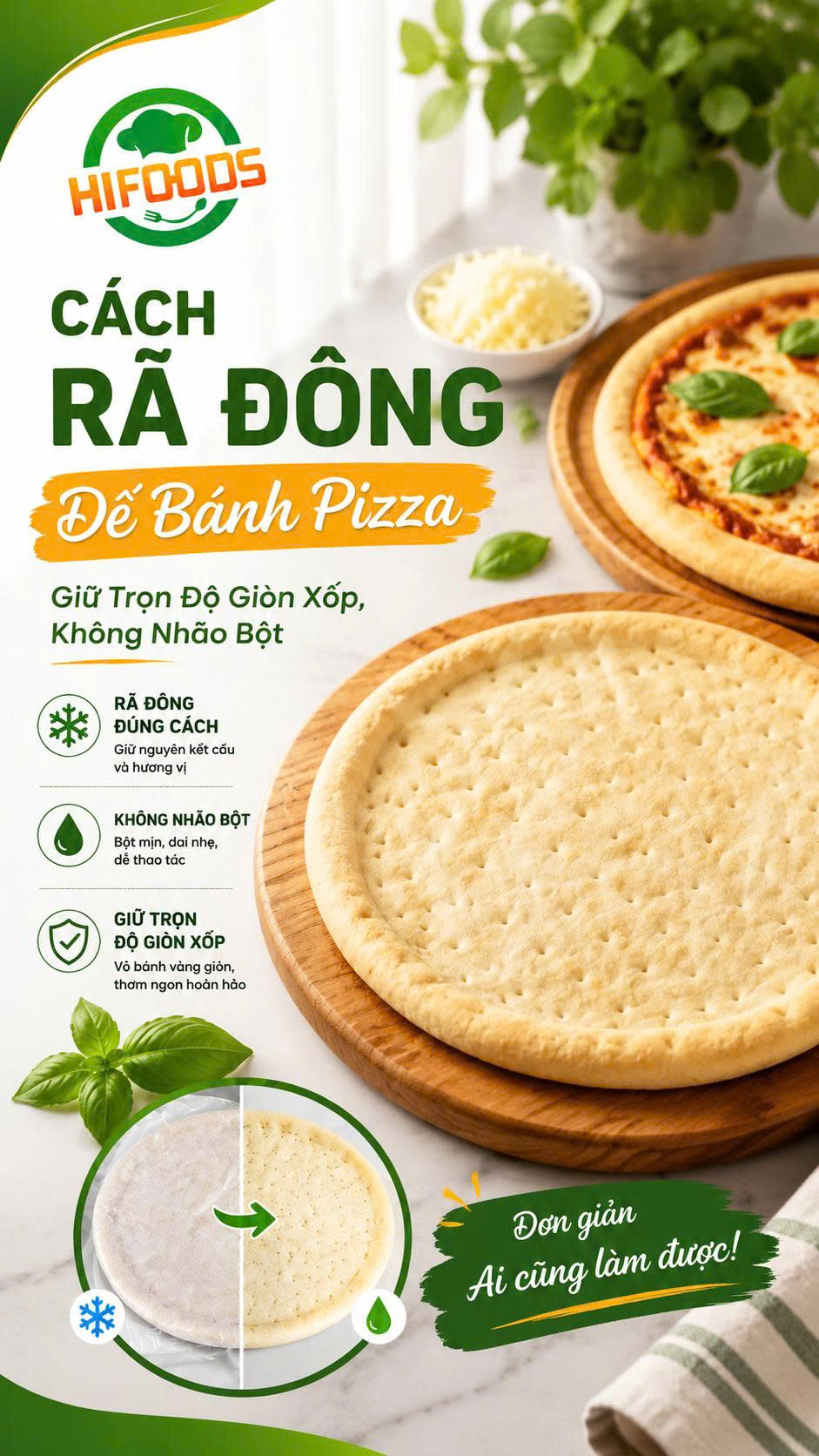
Thawing correctly – The secret to a perfectly crispy pizza crust, no soggy dough worries
Why does the proper thawing technique for pizza dough determine 80% of the pizza’s taste?
To be honest, many people think that the taste of pizza depends on the stretchy cheese or the rich sauce. But for professional bakers, the crust is what scores points. And surprisingly: whether the pizza comes out crispy or soggy is determined up to 80% right from the step of… thawing.
If thawed incorrectly, your pizza is likely to encounter 3 classic “accidents” below:
- The dough is waterlogged and mushy: When frozen, the water in the dough crystallizes into tiny ice crystals. If thawed too quickly, the ice melts into water that spills out onto the surface before the dough can absorb it. The result is a wet base that, when baked, becomes soggy and not crispy at all.
- The crust becomes hard and chewy: The support structure that helps the crust puff up is the gluten network. The proper thawing technique for pizza dough will give the gluten time to “wake up” naturally and regain its elasticity. Conversely, if the dough is forced to thaw quickly with high temperatures, the gluten network will break, causing the baked pizza to be both chewy and hard.
- The pizza cooks unevenly (burnt outside, raw inside): Putting a pizza dough that is still cold in the center into the oven will cause uneven heat distribution. The outer crust will bake longer and start to burn, while the inner dough remains cold and has not had time to rise.
Simply put: Proper thawing technique is the step that “returns freshness” to the dough. When the dough is uniformly soft and the surface is dry, it will puff up when exposed to the high temperature of the oven, creating a beautifully baked crust and maintaining the perfect crispiness!
3 Proper Thawing Methods for Pizza Dough from Hi Foods
In restaurant and F&B operations, the speed of dish preparation and the consistent quality of the final product are two vital factors. Depending on the preparation time and the number of customers during each shift, you can apply one of the 3 proper thawing methods for pizza dough below from Hi-foods. This process helps maintain the structure of the puffy crust, a crispy base, and completely eliminates the risk of soggy dough or waterlogging.
Method 1: Slow Thawing in the Refrigerator (Recommended)
This is the thawing method for pizza dough that meets the highest standards in professional baking. Gradually lowering the temperature in a controlled environment helps the dough regain its perfect smoothness as when it was just kneaded.
Outstanding advantages: Maintains absolute moisture balance, helping the gluten structure recover its elasticity. The dough will puff up maximally when baked, without thermal shock or cross-contamination.
Preparation time: 4 – 8 hours (ideally transfer the dough from the freezer to the refrigerator overnight before operation).
3-step process:
- Preparation: Take the required amount of pizza dough out of the freezer, keeping it in the vacuum-sealed plastic bag.
- Thawing: Lay the dough flat on a tray and place it in the refrigerator at a controlled temperature of 0°C – 4°C.
- Completion: Before cooking, take the dough out 10–15 minutes in advance to let it “rest” at room temperature and completely reduce the cold before proceeding to spread sauce and add toppings.
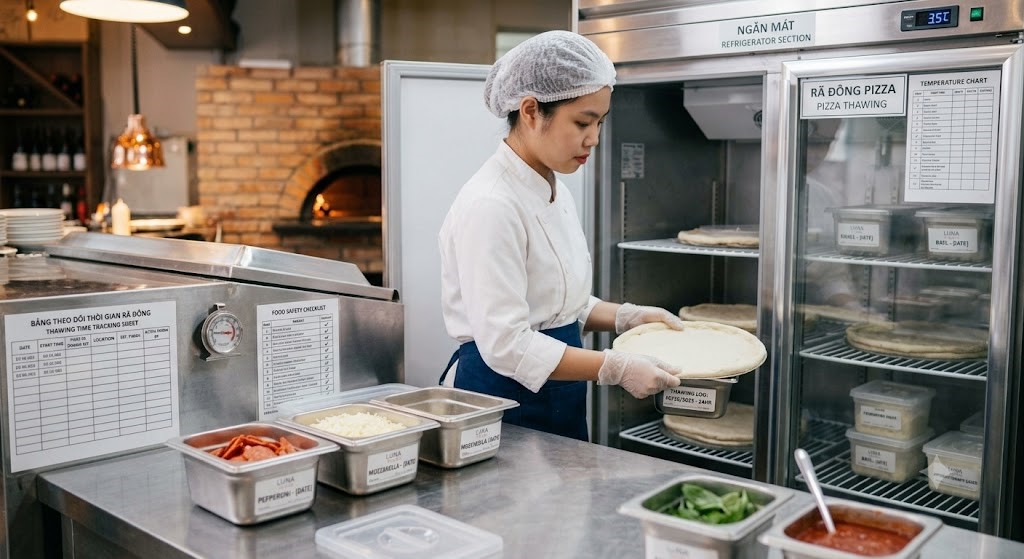
Proper thawing process, preserving the dough structure
Method 2: Quick Thawing at Room Temperature (For Urgent Shifts)
During peak hours when the number of orders suddenly increases, applying the method of thawing pizza dough at room temperature is a flexible solution that helps the kitchen handle orders promptly while still maintaining stable pizza quality.
Outstanding advantages: Shortens preparation time, meeting the fast operational capacity of the business kitchen.
Preparation time: 30 – 60 minutes (depending on the surrounding temperature).
3-step process:
- Preparation: Separate each frozen pizza dough bag and evenly place them on a flat tray or stainless steel work table in a dry, cool area.
- Note the sealing principle: Absolutely do not tear the outer plastic bag. This layer of plastic prevents air from drying out the surface of the dough and blocks condensation from directly settling on the dough.
- Check for readiness: Gently press your finger into the center of the dough. If the dough feels uniformly elastic and the center is no longer cold and hard, it is ready to be baked.
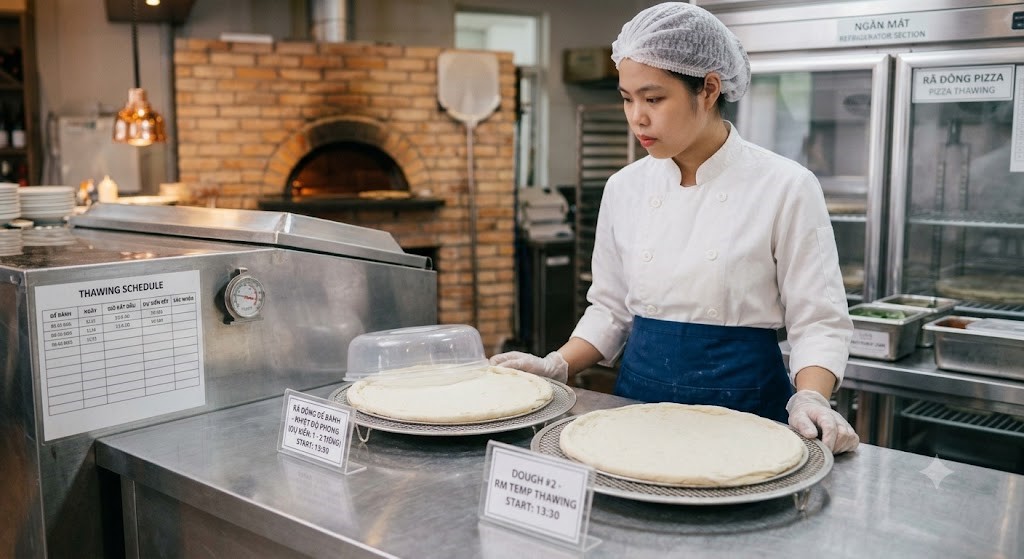
Strict temperature control from the thawing step
Method 3: Direct Thawing by Baking Oven / Air Fryer
With breakthrough super-fast freezing technology IQF, the Hi-foods pizza dough line (par-baked & Leopard Spots) allows you to completely skip the traditional thawing step! The chef or staff can directly take the dough from the freezer, flexibly spread sauce, sprinkle cheese, add favorite toppings, and place it straight into the oven or air fryer. The high heat will instantly lock in moisture, helping the crust regain perfect crispiness in just a few minutes – an optimal solution to help restaurants accelerate dish delivery during peak hours.
Outstanding advantages: Optimizes the cooking process, allowing the crust to regain its crispiness instantly in just a few minutes.
Preparation time: 2 – 3 minutes for quick heat treatment.
3-step process:
- Start the equipment: Preheat the specialized oven or air fryer to a temperature of 180°C – 200°C for 5 minutes to stabilize the temperature.
- Quick thawing bake: Place the still-frozen dough directly into the oven for 2 – 3 minutes. The high heat will quickly evaporate excess moisture on the surface and completely melt the ice in the center of the dough.
- Complete the dish: Remove the dough, quickly spread tomato sauce, sprinkle Mozzarella cheese along with toppings, and then return it to the oven to finish baking at high temperature.
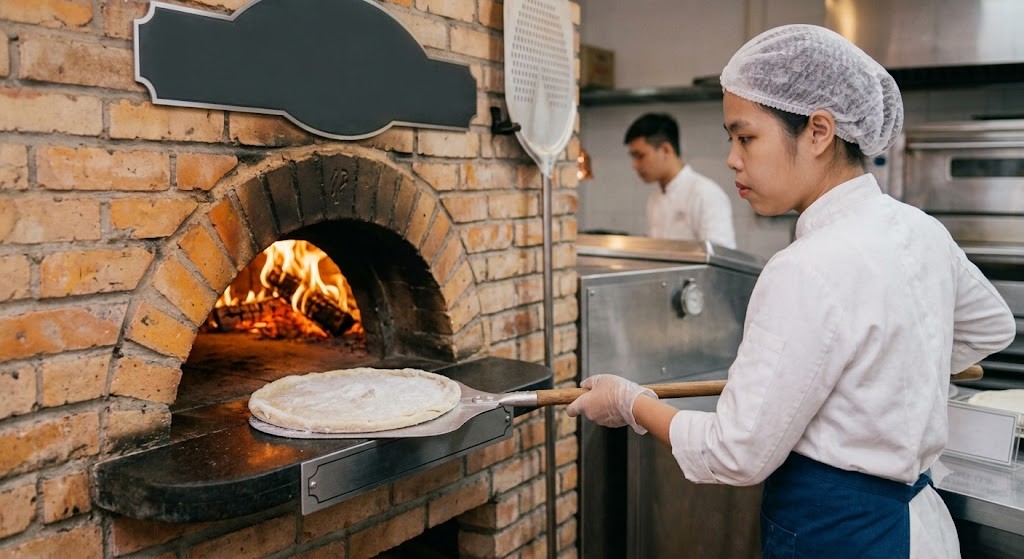
Optimize serving time while preserving crispiness
Checklist of 4 Serious Mistakes to Avoid When Thawing Pizza Dough
To ensure smooth kitchen operations, avoid disrupting customer experience, and prevent wasting core ingredients, the kitchen team must absolutely avoid the following 4 common basic mistakes:
| Technical Mistake | Consequences for Pizza Quality | Accurate Solutions | |
| 1. Refreezing fully thawed dough | Completely breaks down the gluten network. New ice crystals will form and puncture the dough structure, causing the baked crust to be hard, rough, and increasing the risk of cross-contamination. | Estimate the expected number of customers. Only apply the thawing method for the exact number needed for one shift. | |
| 2. Opening the vacuum-sealed bag too early | Ambient air causes the dough surface to lose moisture quickly, forming a hard dry crust (the “dough hardening” phenomenon). The crust cannot puff up when exposed to heat. | Keep the vacuum packaging intact throughout the thawing wait. Only tear the bag when the dough is soft and ready for preparation. | |
| 3. Using a microwave at high power to force thaw | Microwave waves cause water molecules in the dough to boil locally. The dough will be partially cooked, the crust will curl, become gooey, and when baked will be chewy. | Minimize microwave use. If necessary due to urgency, only use the Defrost mode at the lowest power level for 1-2 minutes. | |
| 4. Spreading sauce and toppings while the dough center is still frozen(updated according to Hi-foods technology) | For regular dough: The cold center will release water back to the surface when placed in the oven. The bottom of the pizza will become waterlogged and mushy, while the outer crust shows signs of burning. | With Hi-foods: The dough retains its moisture without releasing water. | Hi-foods pizza dough, thanks to IQF technology, allows for sauce spreading and topping directly while still frozen. Directly taking from the freezer saves thawing time, and the baked crust remains crispy and flavorful. |
Hi Foods – The Ultimate IQF Frozen Pizza Dough Solution for F&B Chains
Mastering the proper thawing method for pizza dough is the key to keeping the deliciousness of the crust. However, the core factor that determines 80% of pizza quality still lies in the quality of the original dough.
As a leading provider of premium pizza ingredients for restaurants, cafes, and F&B models nationwide, Hi-foods offers superior kitchen operation optimization solutions:
- Super-fast IQF freezing technology: Each Hi Foods pizza dough is deep-frozen immediately after par-baking, locking in natural moisture and preserving the microstructure of the dough. As a result, the Hi-foods thawing method becomes extremely easy, with the dough quickly regaining its elasticity without worrying about waterlogging or sogginess.
- Diverse range of premium products: From traditional Italian-style par-baked dough to unique leopard-spotted charcoal-baked pizza dough (Leopard Spots), ensuring your menu always stands out and attracts customers.
- Cost optimization and Preservation: Accurate portion control, minimizing ingredient waste risks, and relieving the pressure of manual dough preparation for kitchen staff.
Start Elevating Your Pizza Quality Today!
Don’t let the thawing process or low-quality dough affect your customers’ experience. Experience the difference with the professional frozen pizza dough line from Hi-foods!
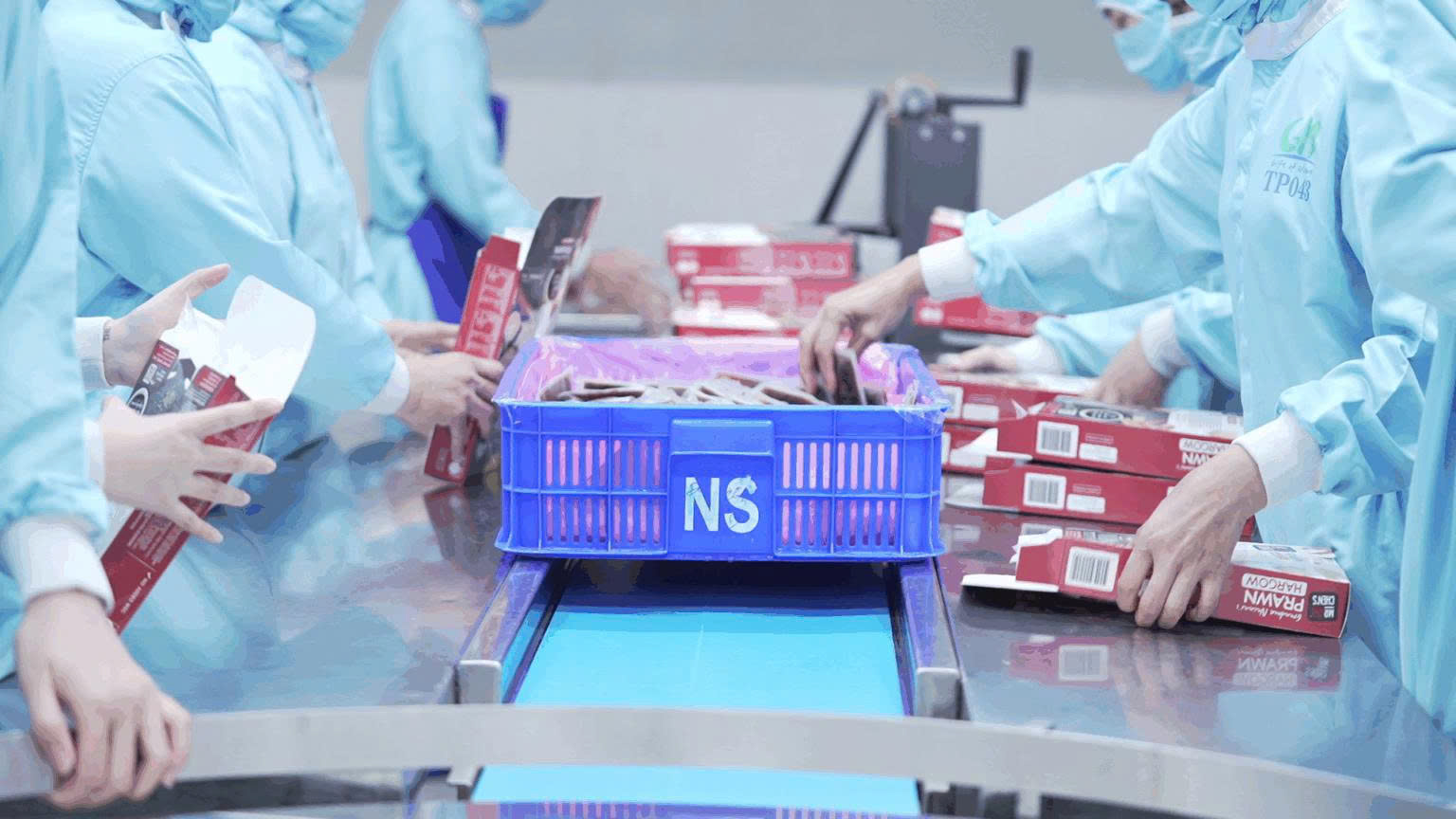
Modern production line – Elevating F&B solutions with Hi-foods
Contact Information
HI-FOODS TRADING JOINT STOCK COMPANY
Head Office: P-4B, Central Road, Long Hau Expanded Industrial Park, Can Giuoc Commune, Tay Ninh Province, Vietnam.
Representative Office: No. 46, Street No. 2, Kim Son Residential Area, Tan Hung Ward, Ho Chi Minh City
Hotline: 028 6262 2897
Email: info@hi-foods.com.vn
Frequently Asked Questions (FAQ) about Thawing Pizza Dough
1. Should I use warm water or soak the dough bag in water to thaw faster?
Absolutely not. Soaking in water (even while still in the bag) easily leads to the risk of condensation due to a large temperature difference, causing the dough surface to become wet and mushy. Additionally, warm water will abruptly change the gluten structure, making the baked crust crumbly or hard. If you need to thaw quickly, apply the quick thaw method using an oven/air fryer or thaw at room temperature while keeping the packaging intact.
2. How long does it take for Hi-foods pizza dough to thaw?
Thanks to the application of super-fast IQF freezing technology that helps ice crystals form at a very small size, Hi Foods pizza dough has a very quick recovery time: only takes 4 – 6 hours in the refrigerator, 30 – 45 minutes at room temperature while keeping the bag, or just 2 – 3 minutes of quick baking at 180°C – 200°C for the dough to be ready for sauce spreading and topping.
3. If I accidentally thaw excess pizza dough during a shift, can I refreeze it?
It is not advisable to refreeze it! Once the pizza dough has completely thawed, refreezing will cause larger ice crystals to form inside, breaking down the resilient gluten network structure of the dough. The result is that when used next time, the pizza will be soggy, dry, and lose its fluffy texture, and will not be crispy when baked. The best solution for the kitchen is to calculate the order quantity just right for each shift to thaw the necessary amount. If there are leftover thawed dough at the end of the shift, wrap it tightly, store it in the refrigerator (0–4°C), and prioritize using it up in the first shift of the next day to ensure the best quality.
Applying the correct thawing method for pizza dough is a simple yet crucial secret that directly affects the crispiness and quality of each pizza. Combining the proper thawing process with the IQF frozen pizza dough solution from Hi Foods will help your restaurant optimize operations, save time, and consistently maintain the quality of authentic Italian flavor in every service shift. To test the quality of the pizza dough and receive optimal cost solutions for your F&B model, connect with the technical team of Hi-foods at Hotline 028 6262 2897 now!


