


HOW FROZEN FOOD IS CHANGING THE F&B INDUSTRY?
“Is frozen food just something that lasts longer?”
If frozen food is still viewed merely as a method to extend shelf life, it may be time for F&B businesses to change their perspective.
In recent years, frozen food has increasingly been chosen by many restaurants, hotels, F&B chains, buffets, cloud kitchens, and food business models as an operational solution. The value of the product lies not only in its preservation capabilities but also in its ability to help businesses proactively manage supply, standardize quality, shorten preparation time, and better control operational costs.
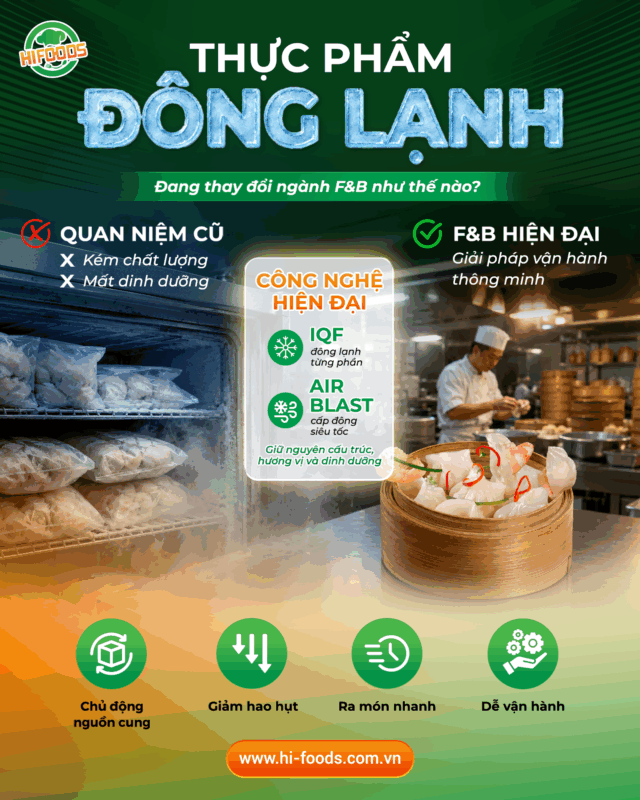
1. FROZEN FOOD: FROM PRESERVATION SOLUTION TO OPERATIONAL SOLUTION
In the past, freezing was simply understood as a way to make food “last longer.” But with modern production technology, this concept has changed.
The quality of a frozen product depends on many factors: the quality of raw materials, the timing of freezing, freezing technology, production processes, storage temperature, and quality control systems.
Therefore, quality cannot be assessed solely based on whether the product is frozen or not.
| Old perception | Modern perspective |
|---|---|
| Freezing to preserve longer | Freezing to proactively manage supply |
| Highly dependent on fresh ingredients | Proactively plan production and inventory |
| Only focused on shelf life | Concerned about technology and processes |
| Multi-step processing in the kitchen | Standardizing part of the process from the factory |
| Difficult to maintain consistency across sales points | Aiming for more stable quality |
For F&B businesses, this is a significant change: frozen food is not just a product stored at low temperatures, but can become a part of the company’s operational strategy.
2. IQF AND AIR BLAST TECHNOLOGY CREATE DIFFERENCE
The quality of frozen food significantly depends on the technology used in the freezing process.
At modern production facilities, technologies such as IQF and Air Blast are applied to control the freezing process and maintain product quality.
IQF Technology – Quick freezing of individual products
IQF, which stands for Individual Quick Freezing, is a method of quickly freezing individual products. This technology is particularly suitable for products that need to maintain shape, structure, and convenience when taking portions for processing.
Air Blast Technology – controlling the freezing process
Air Blast uses cold air streams to reduce the product temperature under controlled conditions. When combined with appropriate production processes, this technology helps maintain product characteristics during storage.
Importantly, freezing technology is just one part of the entire system. The final quality also depends on raw materials, recipes, production processes, temperature control, and post-freezing storage.
3. WHY IS FROZEN FOOD INCREASINGLY SUITABLE FOR F&B?
The F&B industry is under increasing pressure regarding service speed, labor costs, ingredient stability, and consistency across sales points.
In this context, standardized frozen food can bring significant value to business operations.
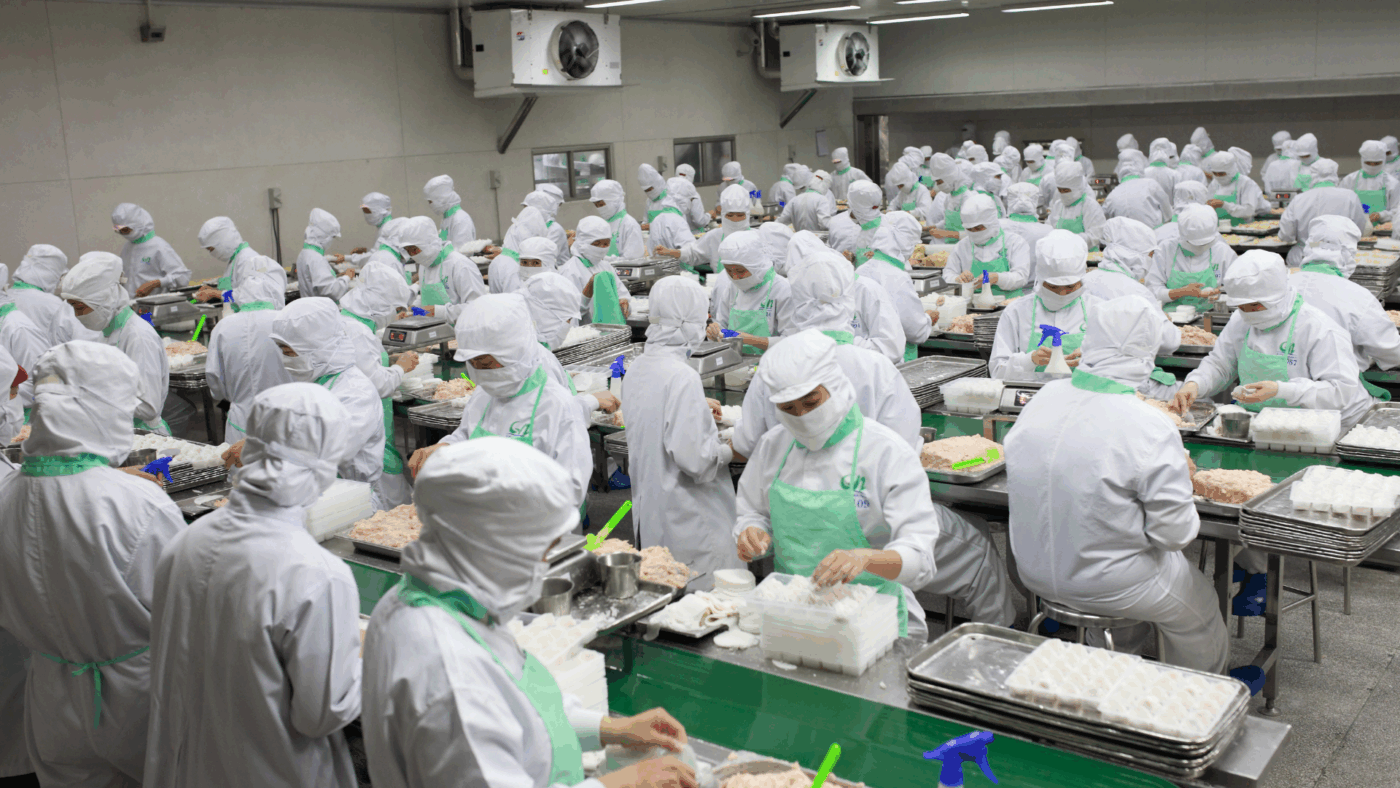
Proactive supply
Businesses can proactively plan inventory and stock products, reducing dependence on seasonality or fluctuations in fresh ingredient supply.
Shortening preparation time
Standardized products from the factory help reduce preparation steps in the kitchen, thereby assisting businesses in shortening the time to serve dishes.
Reducing waste
When products are controlled for quantity and specifications, businesses can more easily plan usage, control inventory, and limit waste during processing.
Maintaining consistent quality
For F&B chains, this is particularly important. A product produced according to standardized processes helps reduce dependence on individual staff or sales points.
4. FROZEN FOOD AND THE STANDARDIZATION CHALLENGE IN F&B
When a business has only one restaurant, quality control can be relatively simple. But when expanding to 5, 10, or dozens of sales points, the challenge becomes entirely different.
How can a dish maintain similar quality across multiple branches?
How can new staff quickly follow the correct processes?
How can dependence on an experienced chef be reduced?
That is when standardized food plays its role.
Instead of letting each kitchen handle all raw materials from scratch, businesses can use products that have been standardized from the factory, then perform the final finishing steps at the sales point.
Standardized factory – simplified kitchen – more consistent quality.
This model is particularly suitable for restaurants, hotels, buffets, F&B chains, cloud kitchens, and models that need to serve large quantities in a short time.
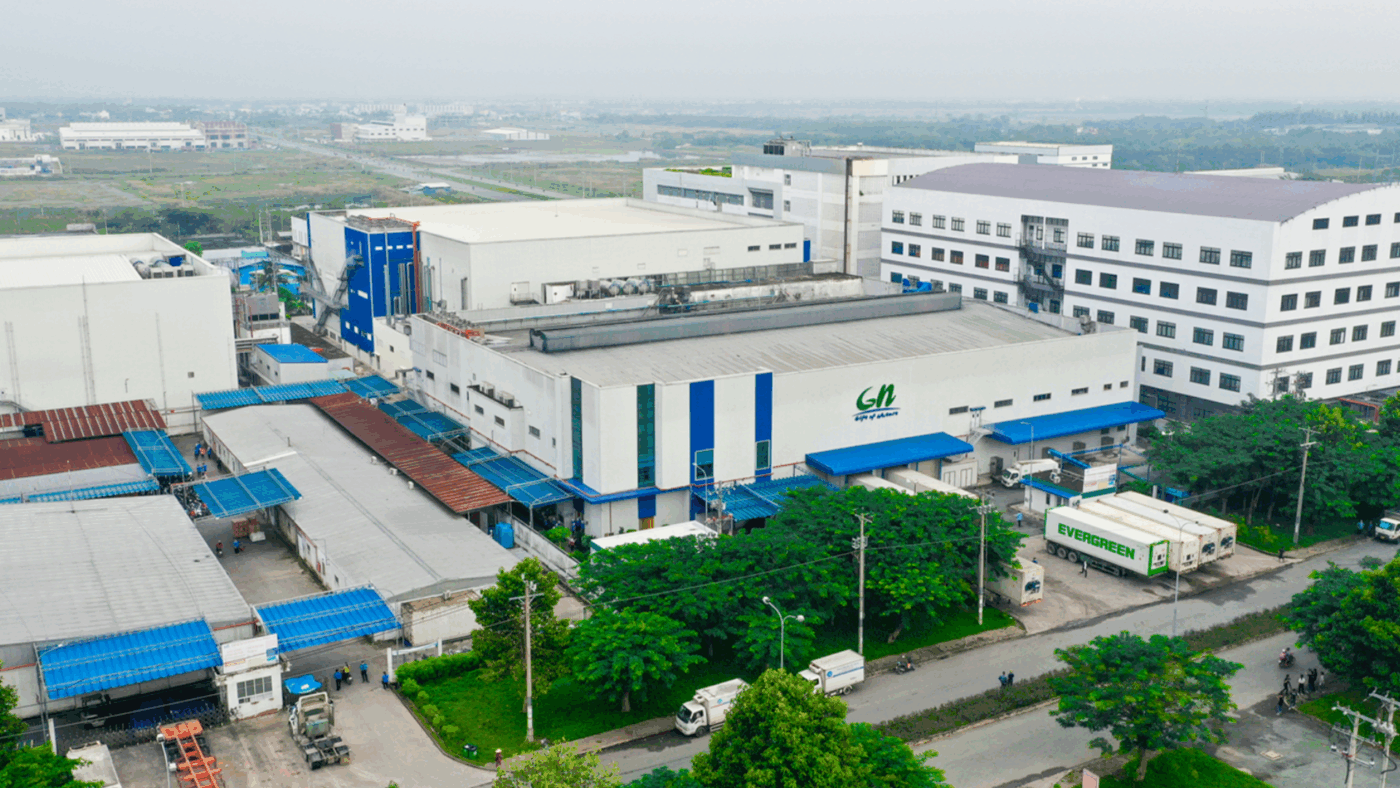
5. HI-FOODS: FROZEN FOOD SOLUTIONS FOR BUSINESSES
With HI-FOODS, frozen food is not merely viewed as a product, but as part of a comprehensive food solution for businesses.
The production platform from GN FOODS combined with IQF technology, Air Blast, and quality control processes helps HI-FOODS develop a diverse product portfolio aimed at stability in quality and supply.
| Business needs | Solutions from HI-FOODS |
|---|---|
| Proactive sourcing | Diverse product portfolio, stable supply |
| Reducing preparation pressure | Standardized products from the factory |
| Optimizing operational time | Convenient products for processing |
| Consistent quality | Standardized production processes |
| Diversifying the menu | Ecosystem of multiple product groups |
| Developing private label products | R&D and OEM capabilities |
From dimsum, pizza, ingredients to various convenient food lines, HI-FOODS aims to meet different needs of HORECA, retail, and OEM partners.
The difference lies not only in the number of products but in the ability to connect products – technology – supply – operations into a solution suitable for each business model.
FROZEN FOOD: A STRATEGIC CHOICE FOR MODERN F&B
Frozen food is gradually changing its role in the F&B industry.
From a preservation solution, frozen products today can become a tool to help businesses proactively manage supply, standardize quality, reduce kitchen pressure, and optimize operations.
However, not all frozen products are the same. The real value lies in the technology behind, the factory capabilities, control processes, and the stable supply ability of the manufacturer.
For F&B businesses, choosing the right supplier is not just about selecting a product, but about choosing a supply foundation that can accompany business operations in the long term.
HI-FOODS – More than just a supplier, providing comprehensive food solutions for businesses.
FAQ – FREQUENTLY ASKED QUESTIONS ABOUT FROZEN FOOD
1. Is frozen food guaranteed to be of good quality?
Yes. Quality depends on raw materials, production processes, freezing technology, storage temperature, and quality control systems. Therefore, businesses should prioritize choosing products from factories with clear production and quality control processes.
2. What is IQF technology?
IQF is a technology for quickly freezing individual products. This method makes products convenient to use and helps maintain shape and structure during freezing and storage.
3. Is frozen food suitable for restaurants and HORECA?
Yes. This product group is suitable for many models such as restaurants, hotels, buffets, F&B chains, cloud kitchens, and units that need to serve large quantities with high demands for speed and stability.
4. How does frozen food help restaurants optimize operations?
Standardized products from the factory can help reduce some preparation steps, shorten preparation time, control portions, and support maintaining consistent quality across shifts or sales points.
5. What frozen food groups does HI-FOODS provide?
HI-FOODS offers a diverse portfolio serving HORECA, retail, and OEM, including dimsum, pizza, ingredients, and many other convenient food groups.
6. Does HI-FOODS develop OEM products?
Yes. HI-FOODS has R&D and OEM capabilities, supporting businesses from research, developing recipes to finalizing and producing products as required.
7. What criteria should businesses use to choose a frozen food supplier?
Besides price, it is important to evaluate factory capabilities, production technology, quality, supply ability, product portfolio, stability, and R&D/OEM capabilities to ensure the supplier can accompany the business as it expands.


